Embarking on the journey of healthy hair can feel daunting, especially when faced with an overwhelming array of products and advice. This comprehensive guide aims to demystify daily hair care, providing beginners with the foundational knowledge and practical tips needed to achieve lustrous, manageable locks. From deciphering your hair’s unique characteristics to establishing a consistent routine, we’ll cover everything you need to know to nurture your strands from root to tip.
Before you can effectively care for your hair, you must first understand it. Just like skin, hair comes in various types, each with its specific needs and characteristics. Identifying your hair type is the crucial first step in building a personalized and effective hair care regimen.
Decoding Your Hair Type: Texture, Density, and Porosity
Your hair’s texture refers to the circumference of individual hair strands. It can be fine, medium, or coarse. Fine hair is delicate and prone to breakage, often struggling to hold styles. Medium hair is the most common texture, offering a balance of strength and manageability. Coarse hair is thick and strong, often feeling a bit rougher to the touch and requiring more hydration.
Beyond texture, consider your hair’s density, which is the number of hair strands on your scalp. Low density means you have fewer hairs, and your scalp might be easily visible. Medium density is a good balance. High density means you have a lot of hair, which can often feel heavy and require more product to style.
Finally, hair porosity is a key indicator of how well your hair absorbs and retains moisture. High porosity means your hair’s cuticle is often open, allowing moisture in quickly but also letting it escape just as fast. This can lead to dryness and frizz. Medium porosity is generally considered the ideal, as the cuticle is slightly raised, allowing for good moisture absorption and retention. Low porosity hair has tightly closed cuticles, making it difficult for moisture to penetrate. Products may sit on top of the hair, and it can take a long time to dry. A simple test for porosity involves dropping a clean strand of hair into a glass of water. If it sinks quickly, it’s high porosity. If it floats for some time before slowly sinking, it’s medium. If it floats on the surface, it’s low porosity.
Recognizing Scalp Concerns: The Root of Healthy Hair
Your scalp is the foundation of healthy hair, and ignoring its needs can lead to a host of problems. A dry, itchy scalp indicates a lack of moisture, while an oily scalp suggests an overproduction of sebum. Various factors, such as dry skin, oil overproduction, or fungal overgrowth, can cause dandruff, a common complaint. Knowing these conditions will direct you towards the appropriate shampoos, treatments, and lifestyle modifications.
Once you clearly understand your hair type and any prevalent scalp concerns, you can begin to assemble a collection of products that genuinely benefit your hair. The vast market of hair care can be overwhelming, but a targeted approach based on your hair’s needs will simplify the process.
Shampoos and Conditioners: The Dynamic Duo
The cornerstone of any hair care routine is a good shampoo and conditioner. For dry hair, look for moisturizing formulas that contain ingredients like hyaluronic acid, argan oil, or shea butter. Oily hair benefits from clarifying shampoos that gently remove excess oil without stripping the scalp. Fine hair needs volumizing shampoos that won’t weigh it down, while thick hair can tolerate richer, more emollient conditioners. Color-treated hair requires sulfate-free formulas to preserve vibrancy. Always choose a conditioner that complements your shampoo, as they are designed to work together to balance and nourish your hair.
Leave-In Treatments and Styling Aids: Boosting Health and Manageability
Beyond the basic wash and condition, leave-in treatments and styling aids play a crucial role in enhancing hair health and manageability. Leave-in conditioners provide an extra layer of moisture and protection, particularly beneficial for dry or damaged hair. Hair masks, used once or twice a week, offer intense hydration and repair. Serums can add shine, reduce frizz, and protect against heat. For styling, choose products that align with your desired look and hair type. Volumizing mousses for fine hair, curl creams for textured hair, and heat protectants for anyone using heat styling tools are essential.
Consistency is paramount when it comes to hair care. Establishing a daily or routine ensures your hair receives the attention it needs to thrive.
Establishing Your Hair Washing Schedule: Finding Your Rhythm
The frequency of hair washing is not universally applicable. It depends entirely on your hair type, scalp oil production, and lifestyle. Oily hair may require daily washing, while dry or coarse hair might only need it two or three times a week. Over-washing can strip hair of its natural oils, leading to dryness, while under-washing can lead to product buildup and scalp issues. Pay attention to how your hair feels and looks to determine your ideal washing frequency.
The Art of Gentle Cleansing: Tips for Washing and Conditioning Your Hair
When you do wash your hair, do so gently. Start by thoroughly wetting your hair with lukewarm water—hot water can be too harsh. Dispense a small amount of shampoo into your palm and emulsify it before applying it to your scalp. Focus on cleansing the scalp with the pads of your fingers, not your nails, to avoid irritation. Allow the shampoo to rinse down the length of your hair, but avoid scrubbing the ends, which are more delicate.
After rinsing the shampoo completely, apply conditioner from the mid-lengths to the ends of your hair, avoiding the scalp unless your conditioner is specifically formulated for it. Leave the conditioner on for the recommended time to allow it to penetrate the hair shaft before rinsing thoroughly with cool water. Cool water helps to seal the hair cuticle, promoting shine and reducing frizz. Gently squeeze excess water from your hair with a microfiber towel instead of vigorously rubbing, which can cause friction and damage.
Environmental stressors and styling tools constantly expose our hair, resulting in significant damage. Incorporating protective measures into your routine is essential for maintaining hair health.
Battling Environmental Damage: How the Elements Affect Your Hair
Sun exposure, harsh winds, and pollution can all take a toll on your hair. Just as you protect your skin from the sun, consider protecting your hair. Wear a hat when spending extended time outdoors, especially during peak sun hours. Look for hair products that offer UV protection. For those living in areas with high pollution, clarifying shampoos can help remove buildup that can make hair dull and lifeless.
Heat Protection: A Non-Negotiable Step for Styling
Heat styling tools, such as blow dryers, straightening irons, and curling wands, can severely damage hair if not used properly. Always apply a heat protectant spray or serum before using any heat styling tool. These products create a barrier that minimizes heat transfer to the hair shaft. Opt for ceramic or tourmaline tools, which distribute heat more evenly and can be less damaging. Always use the lowest effective heat setting and avoid applying heat to the same section of hair repeatedly. Air drying your hair whenever possible is the best way to reduce heat exposure.
Styling doesn’t have to come at the expense of healthy hair. With the right techniques and products, you can achieve beautiful looks while nurturing your strands.
Gentle Styling Practices: Prioritizing Hair Health
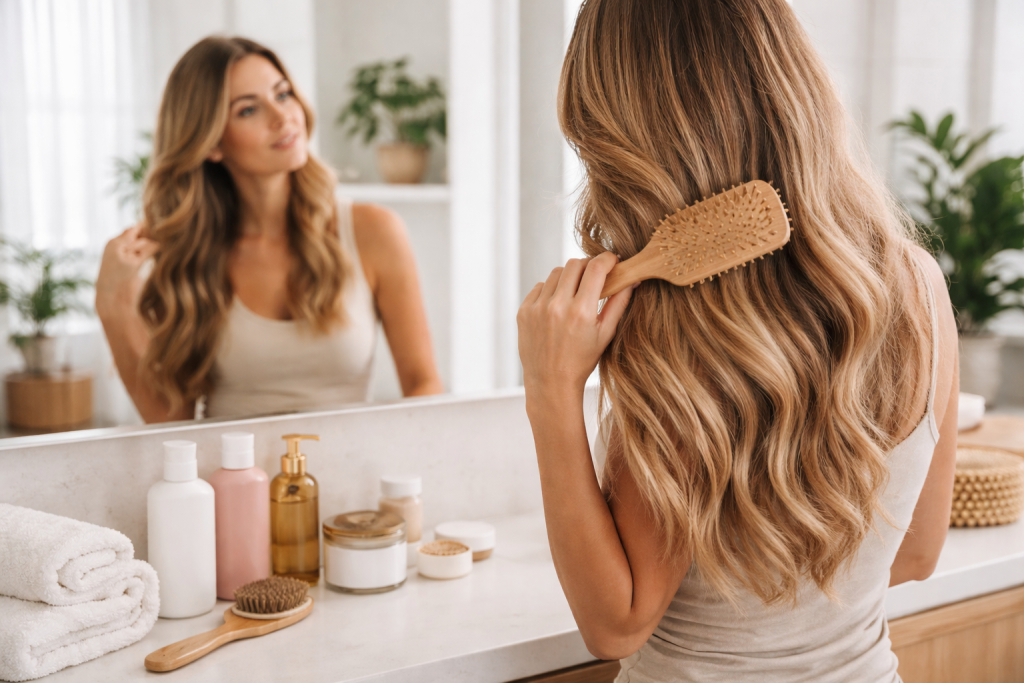
When brushing or combing your hair, always start from the ends and work your way up, detangling knots gently. Wide-tooth combs are ideal for wet hair, which is more fragile. Avoid tight hairstyles that pull on the scalp, as the result can lead to breakage and even hair loss over time. Opt for looser braids, ponytails, or buns, and use silk or satin scrunchies instead of elastic bands to minimize friction.
Enhancing Natural Beauty: Styling for Your Hair Type
Embrace your natural hair texture. For curly hair, use curl-defining creams or gels to enhance your curls and reduce frizz. Straight hair can be enhanced with shine-boosting serums. Wavy hair often benefits from sea salt sprays for a tousled look. Experiment with different styles that highlight your hair’s natural beauty rather than forcing it into a look that requires excessive heat or chemical treatments. Regular trims, even just a dusting of the ends, will remove split ends and keep your hair looking fresh and healthy.
Even with the best intentions, hair issues can arise. Knowing how to address them effectively is part of becoming a hair care pro.
Tackling Frizz and Dryness: Hydration is Key
Frizz and dryness are often symptoms of a lack of moisture. Combat these issues by incorporating deeply hydrating masks into your routine, using leave-in conditioners regularly, and opting for moisturizing shampoos and conditioners. Avoid excessively hot showers, which can strip natural oils, and embrace lukewarm water. Consider adding a humidifier to your bedroom, especially during dry seasons.
Addressing Oiliness and Product Buildup: Clarify and Balance
If your hair is perpetually oily or feels weighed down, you might be dealing with excess sebum production or product buildup. Introduce a clarifying shampoo into your routine once a week or every two weeks to remove residue. Avoid applying heavy conditioners or styling products directly to your scalp. Ensure you rinse your hair thoroughly after shampooing and conditioning. Sometimes, overwashing can trigger the scalp to produce more oil, so observe if reducing your washing frequency actually helps balance oil production.
Dealing with Breakage and Damage: Repair and Protect
A variety of factors, such as heat styling, chemical treatments, harsh brushing, and environmental exposure, can cause breakage and damage. To address this, minimize heat styling, use heat protectants religiously, and be gentle when detangling. Incorporate protein treatments or masks specifically designed to strengthen and repair damaged hair. Regular trims are crucial to remove split ends before they travel further up the hair shaft. Consider a break from any chemical treatments to allow your hair to recover and rebuild its strength. Ultimately, consistent care, patience, and a commitment to understanding your hair’s unique needs will lead you to healthy, beautiful locks.
FAQs
1. What are the different hair types, and how can I determine my hair type?
There are generally four hair types: straight, wavy, curly, and coily. You can determine your hair type by observing the natural pattern of your hair when it is air-dried and considering factors such as texture, thickness, and porosity.
2. How do I choose the right products for my hair?
Choosing the right products for your hair involves considering your hair type, texture, and specific needs. Look for products that are formulated for your hair type and concerns, and consider factors such as ingredients, moisture levels, and potential benefits for your hair.
3. What should my daily hair care routine include?
A daily hair care routine should include gentle cleansing, conditioning, and styling. It’s important to use products that cater to your specific hair type and concerns and to establish a routine that promotes overall hair health and manageability.
4. What are some tips for washing and conditioning my hair effectively?
When washing and conditioning your hair, it’s important to use the right products for your hair type, to focus on the scalp when cleansing, and to use conditioner to moisturize and detangle your hair. Additionally, consider factors such as water temperature and frequency of washing based on your hair’s needs.
5. How can I protect my hair from heat and environmental damage?
To protect your hair from heat and environmental damage, consider using heat protectant products when styling with heat tools, wearing protective styles, and using products with UV protection. Additionally, minimizing exposure to harsh weather conditions and using satin or silk materials for sleeping can help protect your hair from damage.